
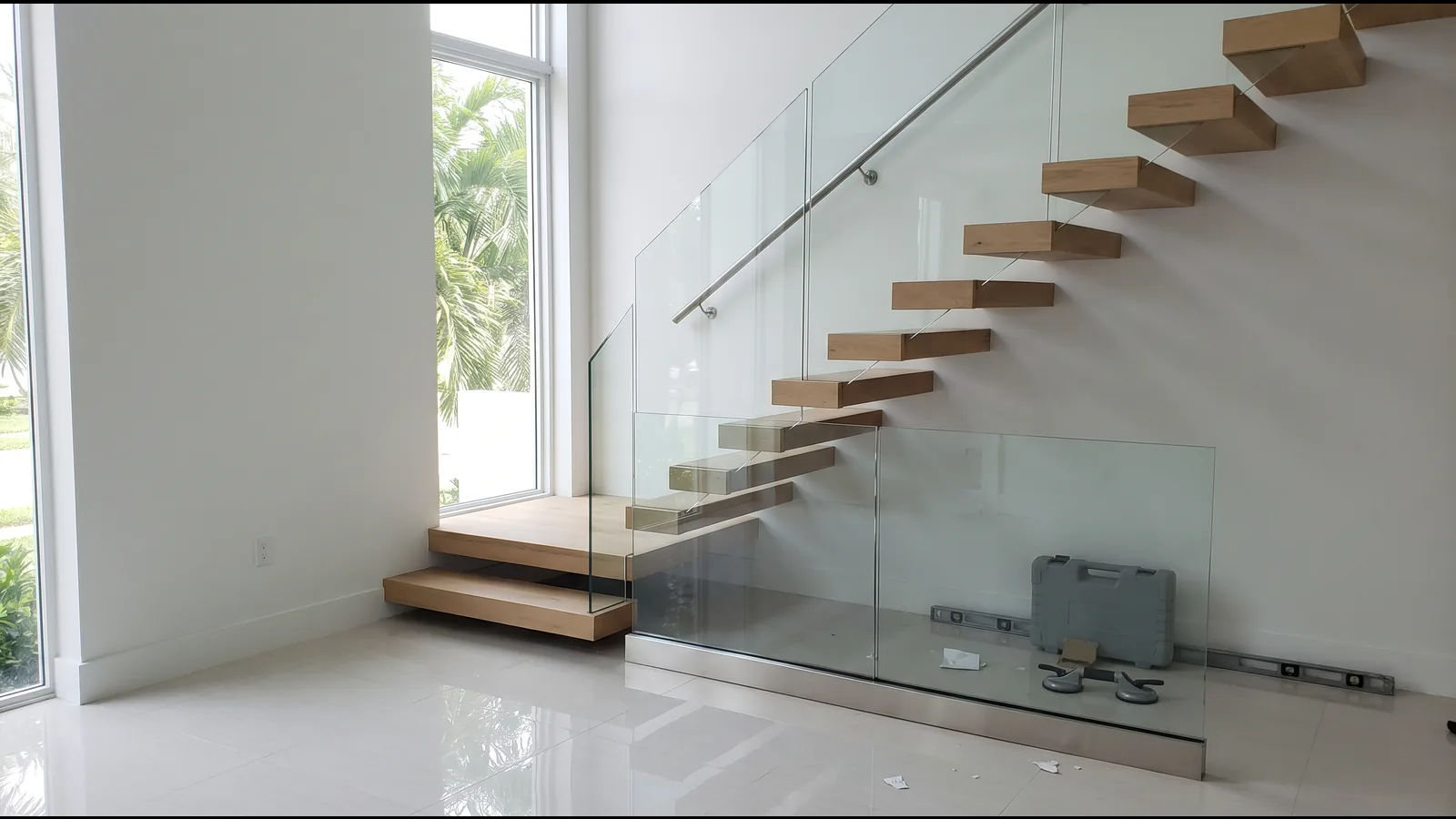
Stainless Steel Railing Types
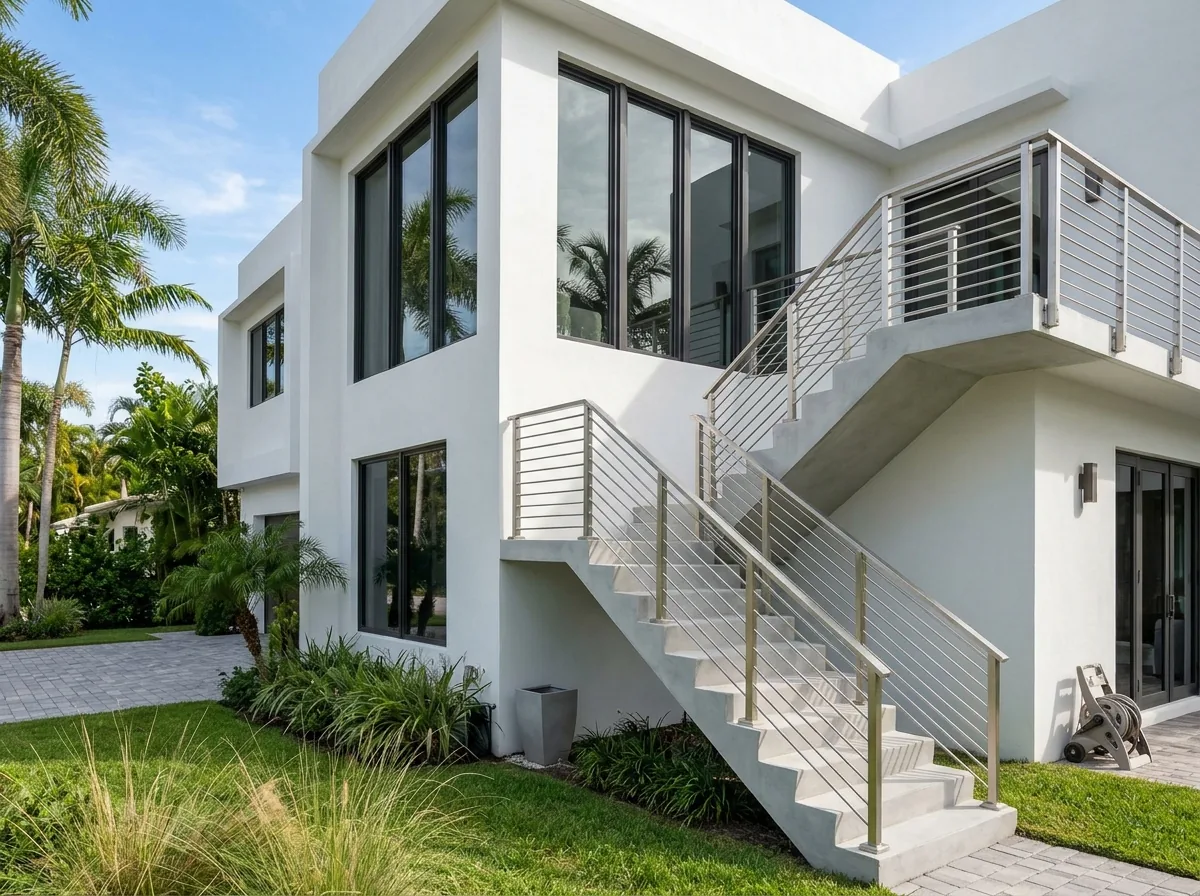
Stainless post and rod railings
Square or round stainless posts with solid rods or bars between them give the cleanest metal look. Ledges and crevices are where salt sits. IMOA advises eliminating horizontal surfaces and sealing crevices, and ASSDA notes that runoff drying on flat surfaces makes conditions more corrosive, so ask how the design sheds rain.
- Installed, stair railing: $50 to $250 per linear foot (HomeGuide).
- Installed, deck railing: $30 to $80 per linear foot (HomeAdvisor, 2026).
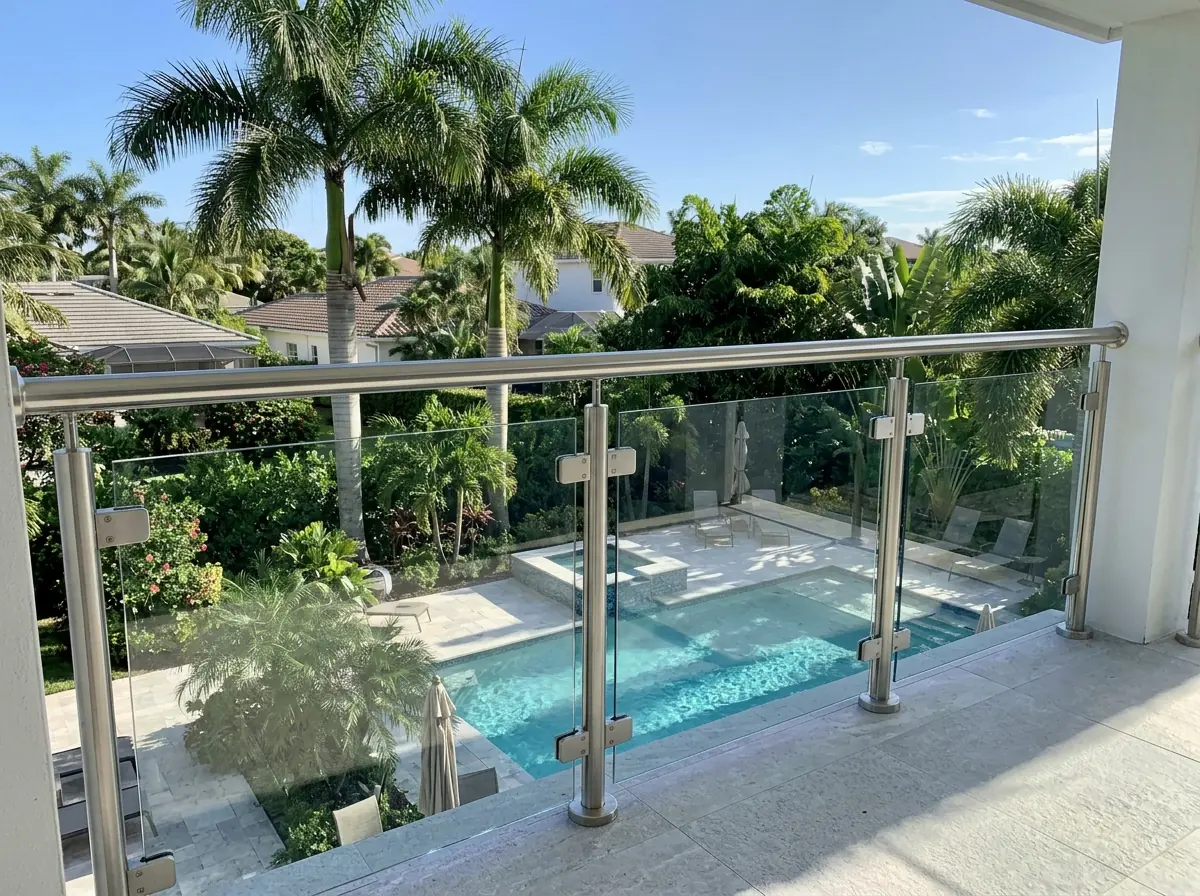
Stainless posts with glass panels
Glass between stainless posts is the outdoor version of a glass railing. HomeGuide notes that outdoor glass railings cost slightly more than indoor ones because they use thicker glass and stainless posts and hardware. The glass itself has its own code rules, covered on the glass railing page.
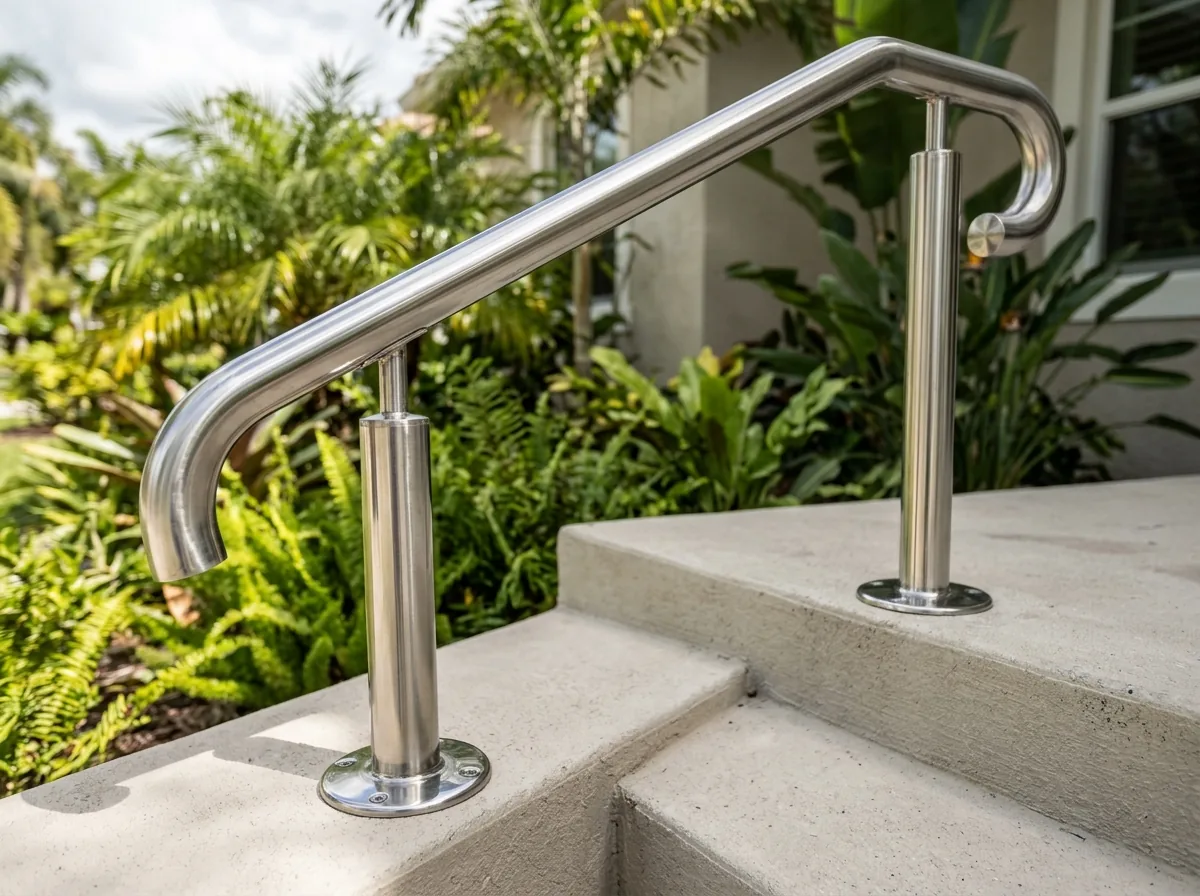
Stainless pipe handrails
A round stainless tube is a durable handrail for entry steps, pool steps and wall-mounted runs. It has to meet the same code handrail height and grip size as any other rail.
- Materials only: $25 to $60 per linear foot (Fixr).
Stainless cable infill
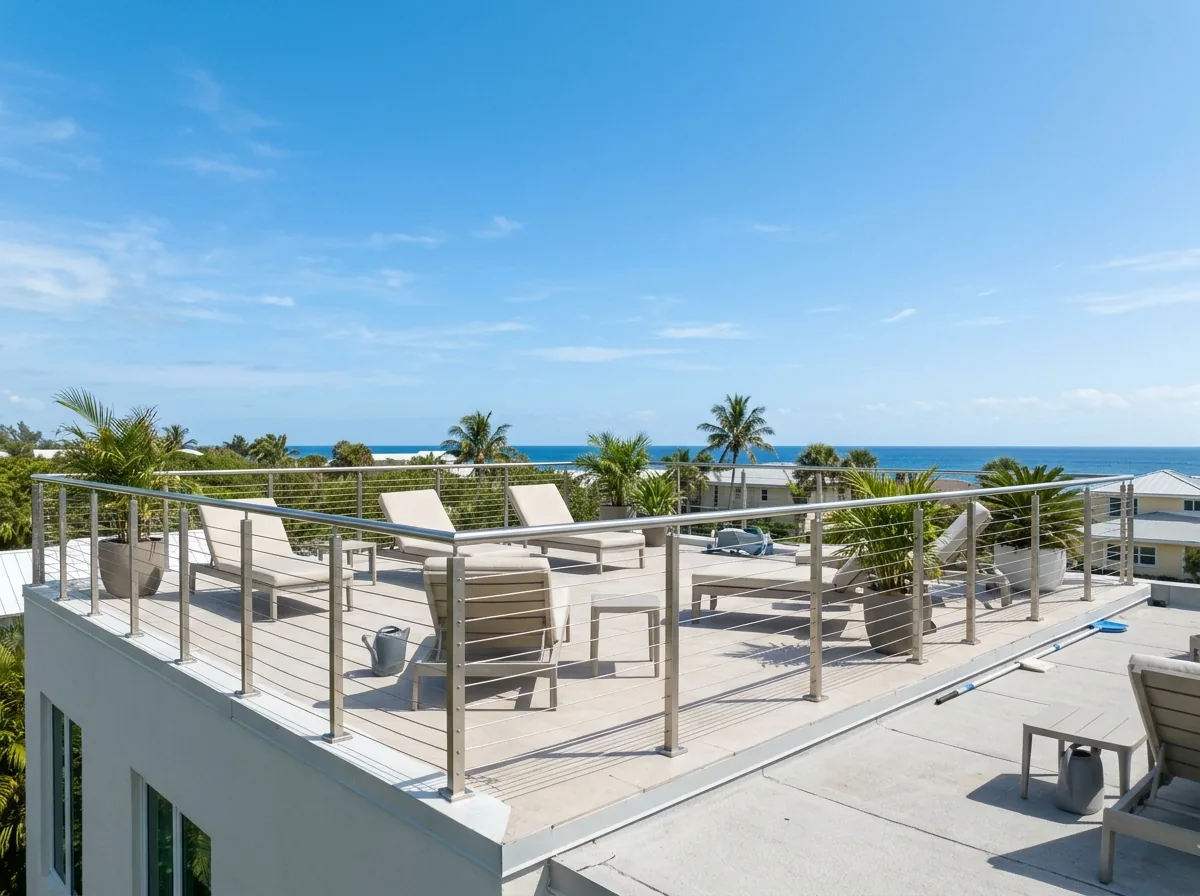
Tensioned stainless cable between stainless posts keeps a view open. It's a separate system with its own spacing and tension rules; see cable railing.
Why Pompano Beach homeowners call Pompano Stair Railing
- One local railing installer per request, not a call list
- Free to homeowners: no referral fee
- Ask for material, finish and hardware grade in writing
- Permit and inspection named on the quote
316 vs 304 Stainless Steel Near Salt Air
How far a railing sits from salt water decides the grade. The International Molybdenum Association (IMOA) scores the site and adds up the points:
Low exposure
1 to 10 miles from salt water: 1 point.Moderate exposure
100 feet to 1 mile: 3 points.High exposure
Within 100 feet: 4 points.Salt spray or splash
5 points.
A total of 0 to 2 points makes 304 the cost-effective choice; 3 points, 316; 4 points, 317L or better; 5 or more, a duplex grade such as 2205. Washing lowers the score, by 3 points when the steel is washed at least monthly. Pompano Beach runs from oceanfront towers to homes well inland, so the answer differs by address.
The difference shows up in practice. In an IMOA case study of a seawater pool fence in Australia, the 304 posts corroded while the 316 rails and gate parts beside them didn't. 316 carries about 2% molybdenum, which resists pitting from deposited salt; the Australian Stainless Steel Development Association (ASSDA) calls it the "next step up" from 304, and 316L, a low-carbon version, is used on welded parts to avoid corrosion at the welds. Heat tint left by welding has to be removed to restore the corrosion resistance.
Stainless Railing Finish, Washing and Tea Staining
Tea staining is the brown film that appears on stainless near the sea. ASSDA describes it as cosmetic: it doesn't affect strength or life. It's most common within about five kilometers (roughly three miles) of the surf and worse in hot, humid climates and in rain-sheltered spots such as under a balcony overhang, where salt isn't rinsed off. What to put in the quote:
Surface roughness
No rougher than 0.5 µm Ra, which ASSDA reaches by finishing with 320 grit, or an electropolished finish.Polish direction
Horizontal polish lines on upright surfaces hold runoff; ask for the grain to run vertically.Clean fabrication
Stainless worked with tools or grit from carbon steel picks up rust stains; it should be kept separate.Washing
ASSDA's rule of thumb: when the windows next to the railing need washing, so does the stainless.
See Cable Railings.