
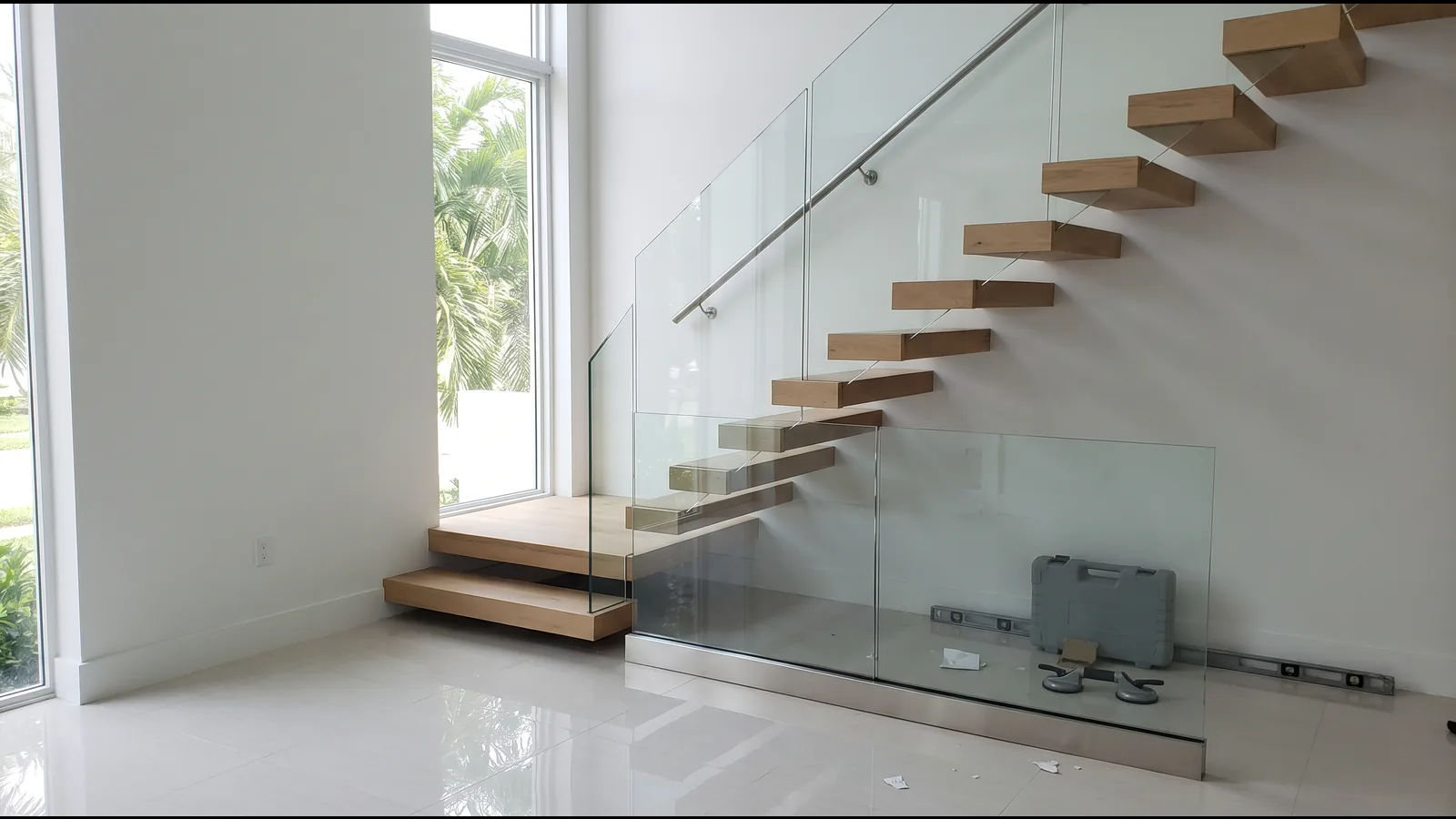
Commercial Railing Types
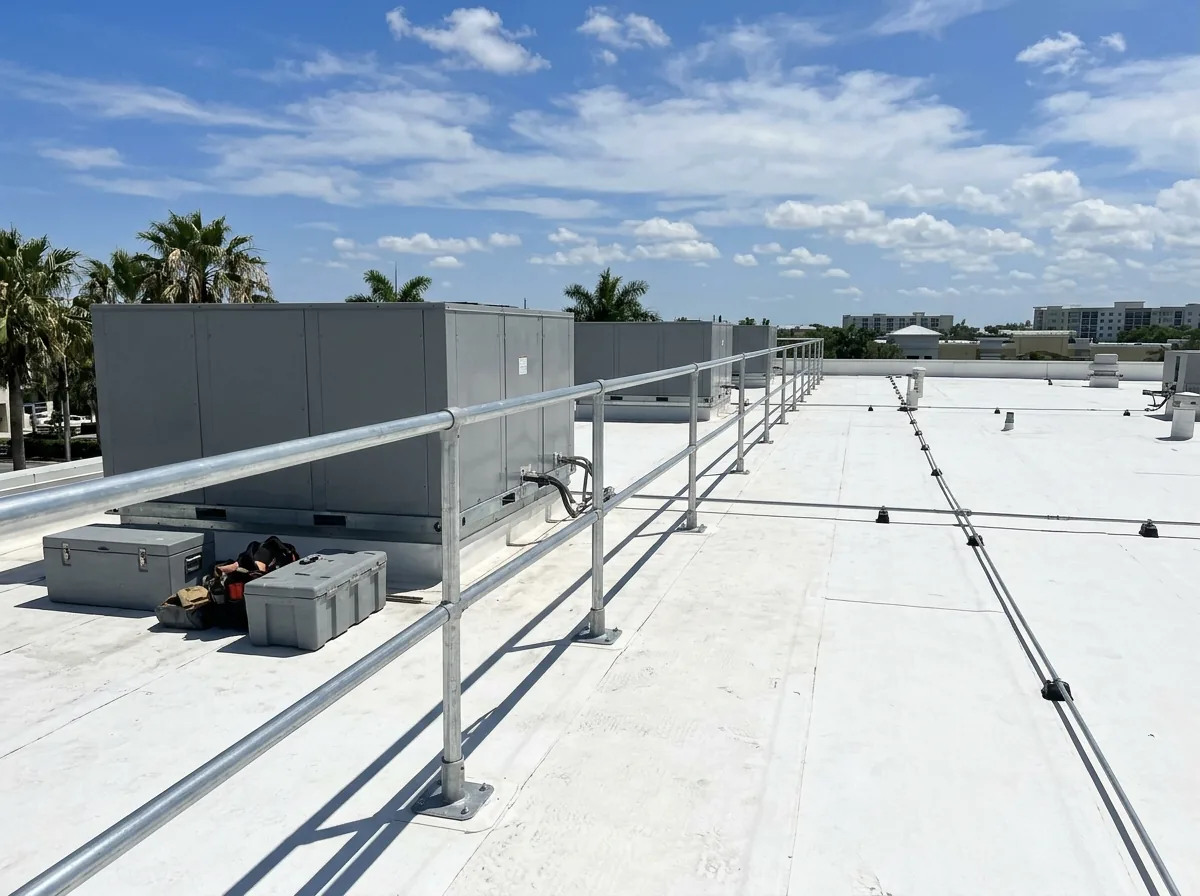
Rooftop Guardrails
Rooftop rails protect whoever services the equipment. The Florida Building Code requires a guard when serviced equipment or a roof hatch sits within 10 feet of a roof edge more than 30 inches above the level below, unless permanent fall-arrest anchors are installed instead. Roof decks people use as amenity space take the full 42-inch guard.
- Guard extent: at least 30 inches past each end of the equipment.
- Openings: must stop a 21-inch sphere.
- OSHA top rail: 42 inches, plus or minus 3, holding 200 pounds without dropping below 39 inches.
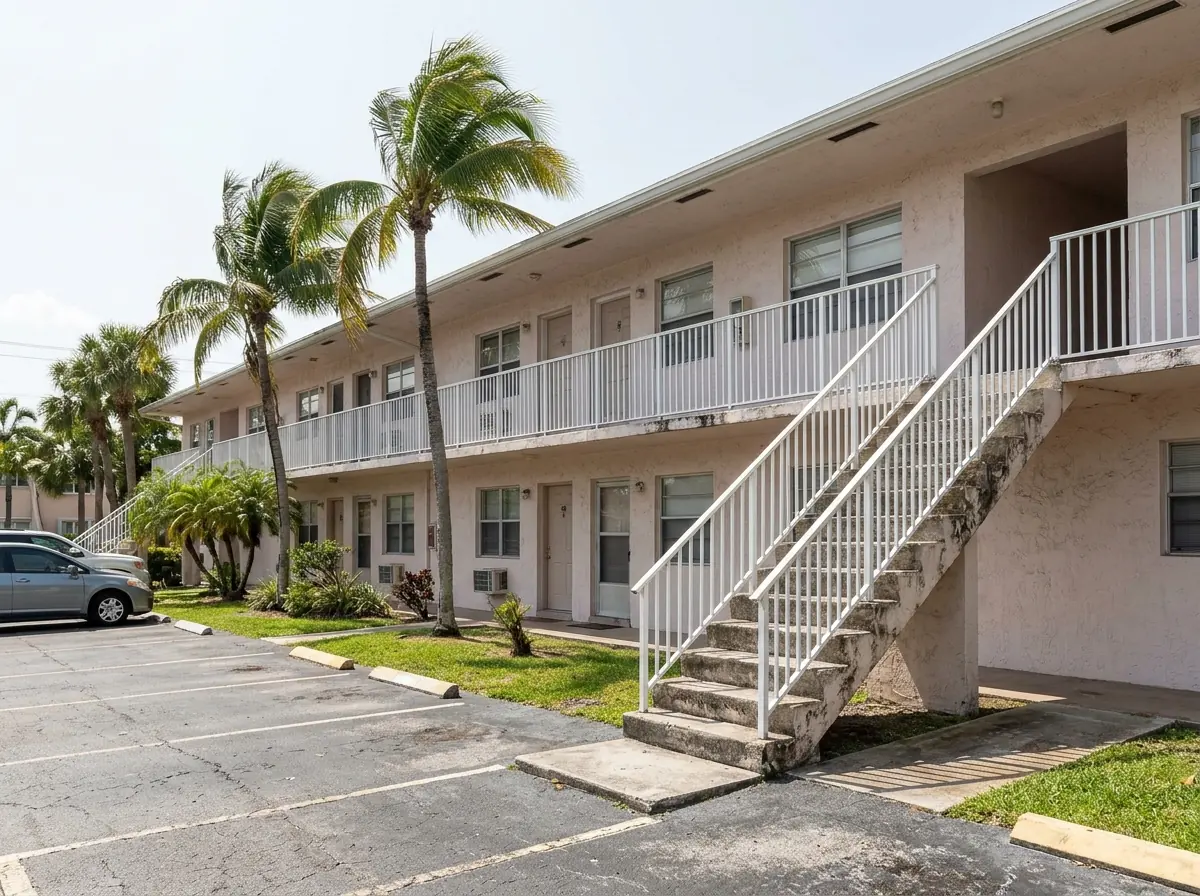
Exterior Common Stairs and Walkways
Garden apartments and low-rise condos often have open-air stairs and second-floor walkways. Outside dwelling units, every stair flight takes handrails on both sides at code handrail height, and open sides take 42-inch guards built to the commercial gap and load rules.
- Handrails: both sides of each flight (one side is allowed only inside dwelling units and on spiral stairs).
- Guards: 42 inches, designed for 50 pounds per linear foot along the top.
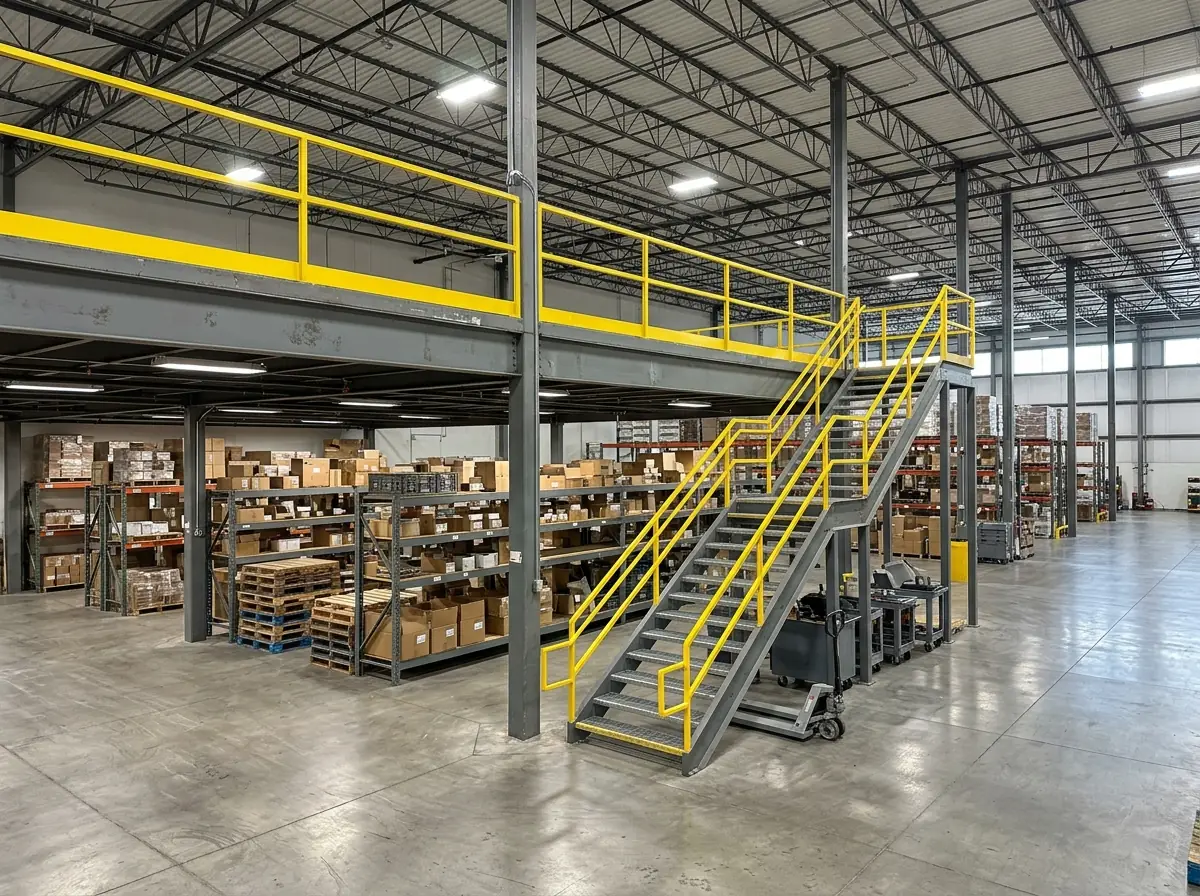
Workplace Guardrails and Stair Rails
Warehouses, plants and other workplaces also answer to OSHA's walking-working surface rule. Its guardrail is 42 inches, plus or minus 3, with midrails or other infill rated for 150 pounds. Stair rail systems installed since January 17, 2017 must be at least 42 inches high, and OSHA allows handrails from 30 to 38 inches.
Building-Wide Balcony Railing Replacement
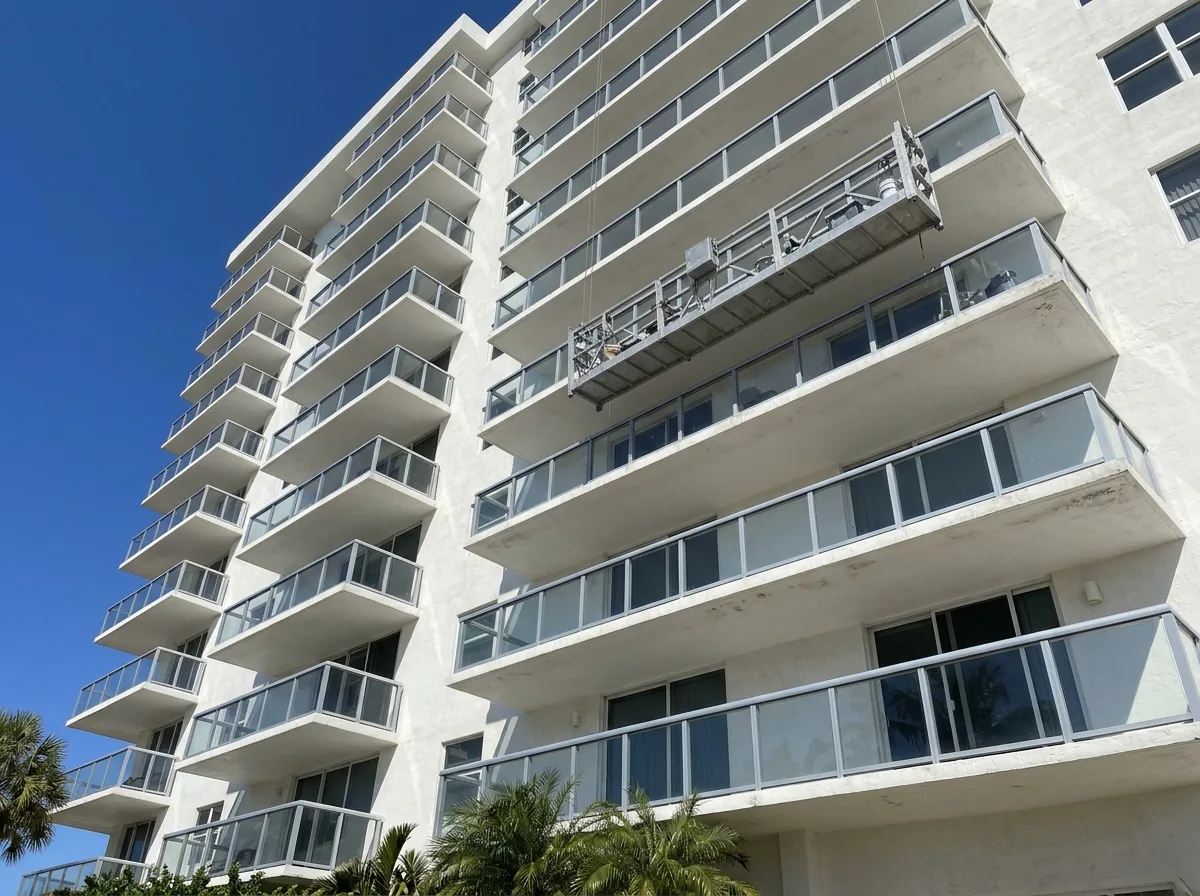
If an inspection report flags balcony railings, an association may decide to replace them on every balcony at once rather than unit by unit. Ask the contractor how access to each unit will be scheduled and whether one approved system can cover the whole building. The material choices and code numbers are on the balcony railing page; exterior glass also has to clear the HVHZ approval rules.
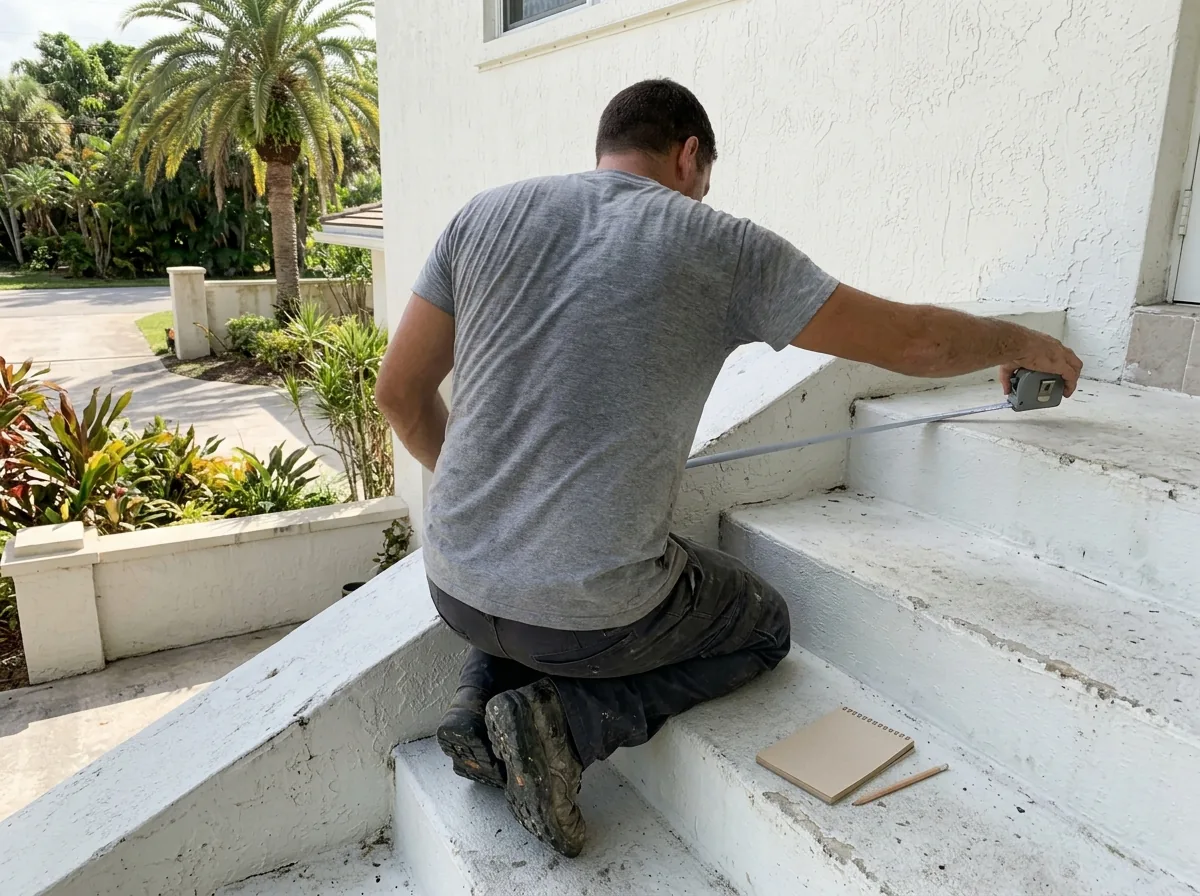
Why Pompano Beach homeowners call Pompano Stair Railing
- One local railing installer per request, not a call list
- Free to homeowners: no referral fee
- Ask for material, finish and hardware grade in writing
- Permit and inspection named on the quote
Condo and Building Inspections That Lead to Railing Work
Three separate inspection rules reach older buildings in Pompano Beach. None of the state statutes names railings; the inspector's report is what sends a building to a railing contractor.
State milestone inspection (F.S. 553.899)
Condo and co-op buildings three habitable stories or taller need one by December 31 of the year they reach 30, then every 10 years; the local agency may set 25 years where salt water or other conditions justify it. Phase one is a visual review of major structural components by a licensed engineer or architect, phase two follows if substantial deterioration turns up, and repairs must begin within 365 days of the phase two report.How the law got here
SB 4-D (Chapter 2022-269, effective May 26, 2022) created the milestone inspection. SB 154 (2023) limited it to buildings with condo or co-op ownership, dropped the automatic 25-year rule for buildings within three miles of the coast, and added a phase two progress report within 180 days.What the statutes don't say
Neither F.S. 553.899 nor the condo statute 718.112 mentions balconies or railings.Pompano Beach building safety inspection
Broward's BORA Policy 05-05 applies to buildings 25 years and older, then every 10 years. It covers balconies, elevated decks, docks and seawalls attached to a structure, and guardrails are not exempt. Homes up to four units and three stories, fee-simple townhouses and buildings under 3,500 square feet are exempt.City deadlines
Notices go out between June 1 and August 31; the owner has 180 days to file the engineer's or architect's report, then 180 days from the report to finish repairs. The report fee is $350 per building.Hotels (F.S. 509.2112)
Public lodging three stories or taller certifies every 3 years that balconies, platforms, stairways and railways are inspected and safe.
Commercial Railing Cost and Timeline
Commercial work adds engineering, sealed drawings where the city asks for them, and a permit priced on the job's value (city permit fees). Work regulated by the Florida Building Code needs a state-licensed contractor. For a building on an inspection deadline, work backward from the 180-day repair window: the permit and custom fabrication come before any railing goes up, and glass can add weeks of production.
See ADA handrails.