
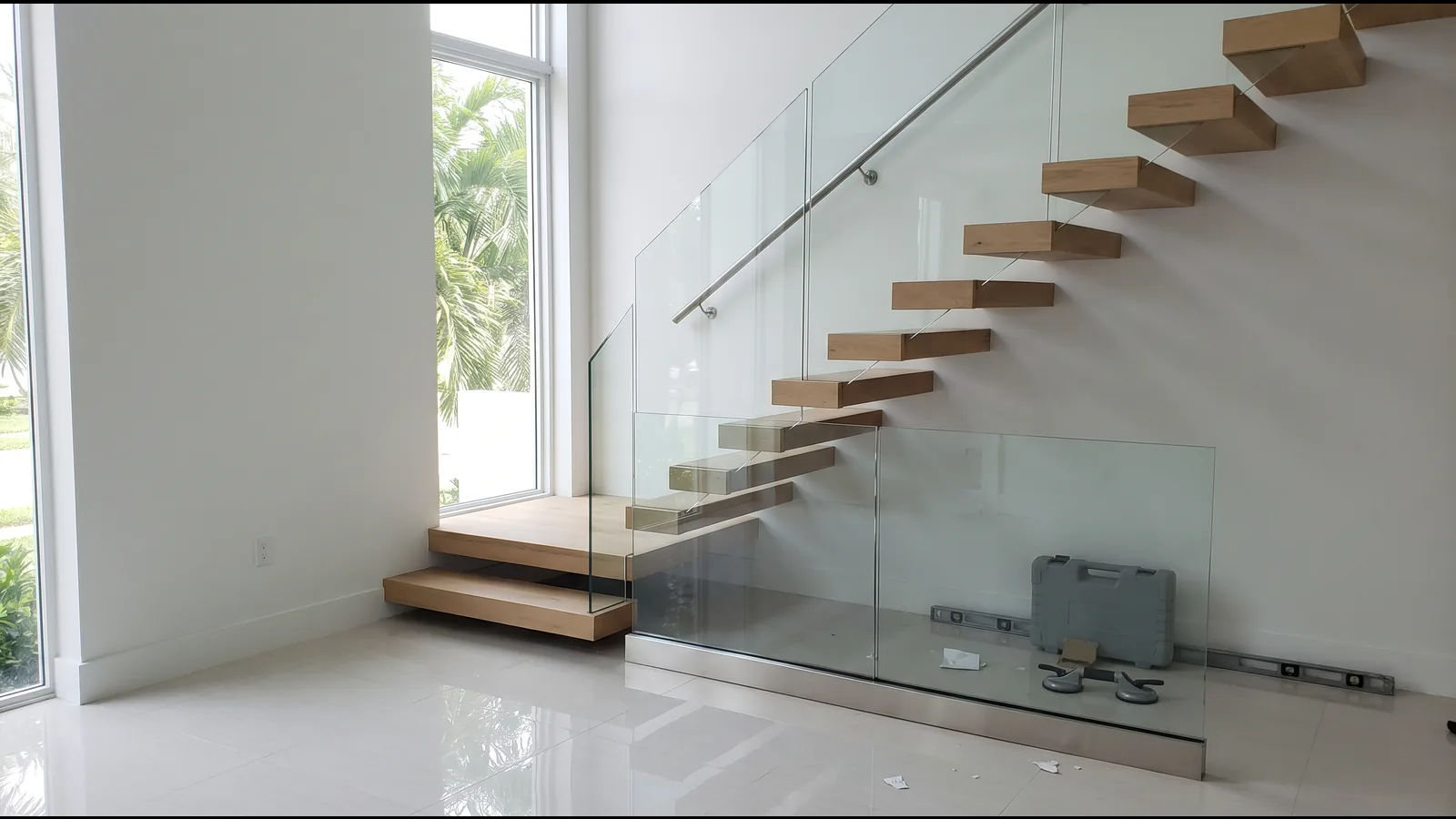
Outdoor Stair Railing Types for Entry Steps
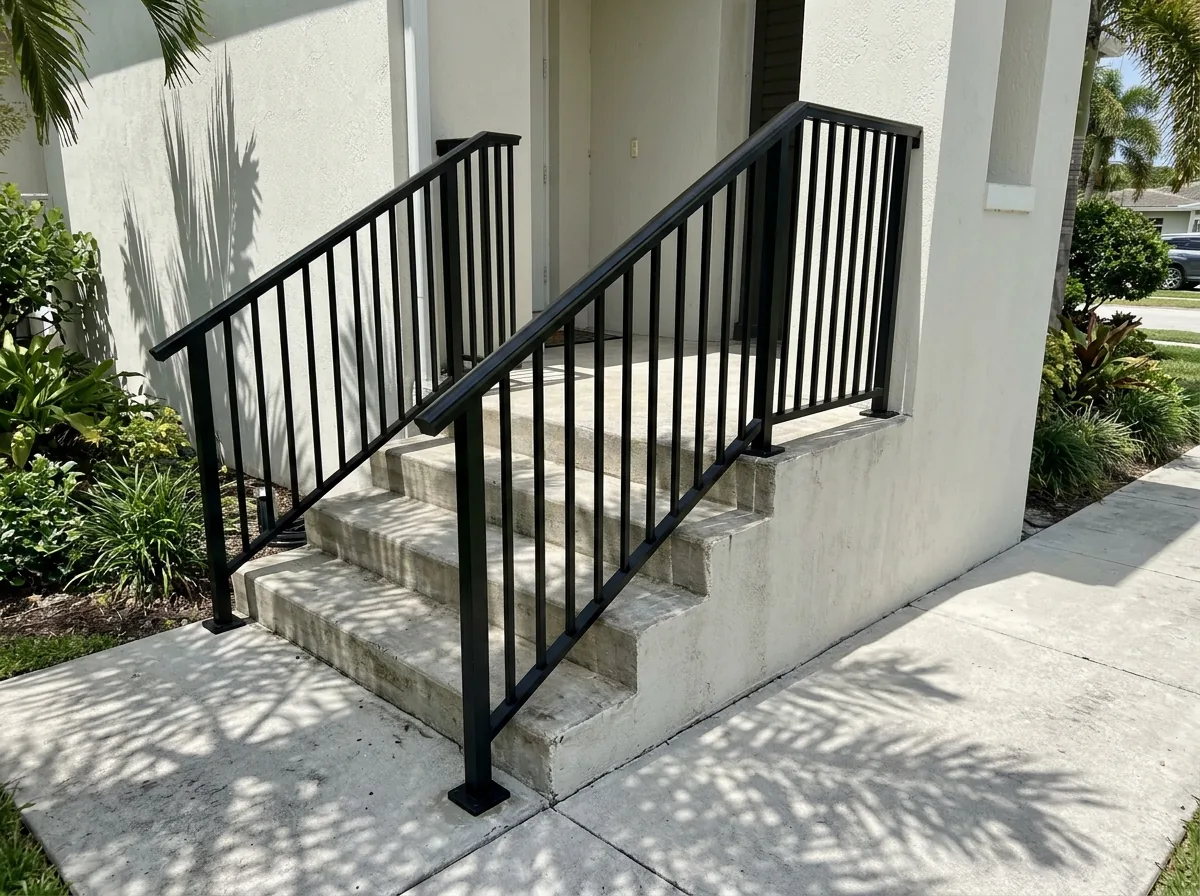
Powder-coated aluminum picket railings
Aluminum is light, won't rust and sits mid-range on price. Two drawbacks to know: it dents more readily than steel, and HomeGuide notes that metal rails can get uncomfortably hot to the touch. Which factory finish the quote names matters more than the color; the aluminum railing page explains the coating grades.
- Aluminum handrail: $40 to $60 per linear foot (HomeGuide, 2026).
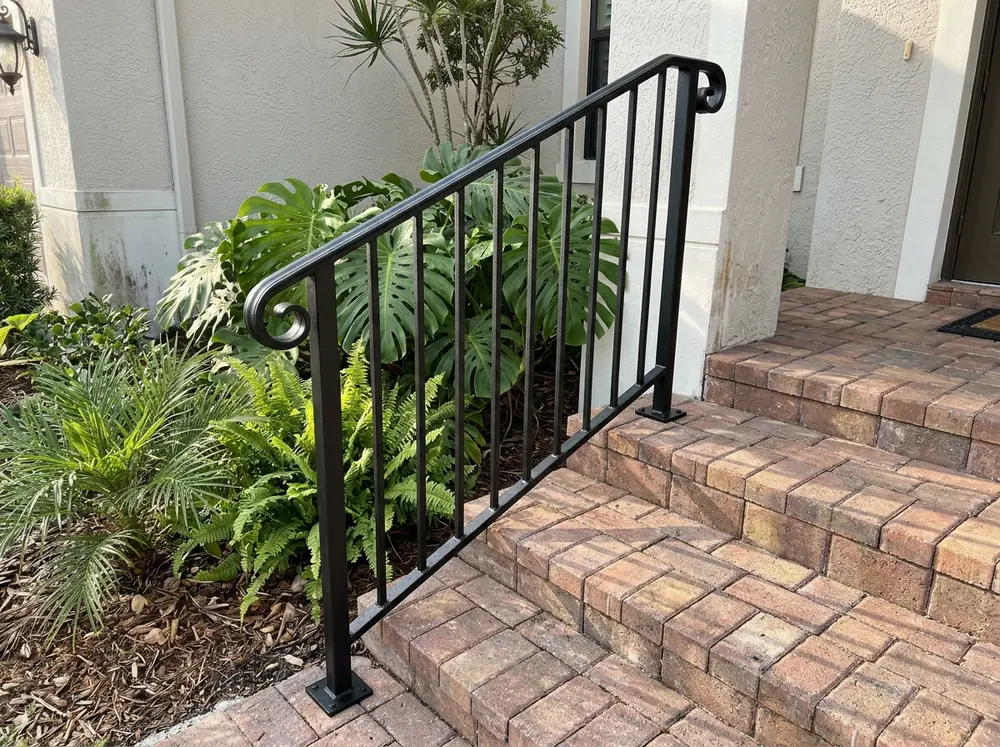
Galvanized steel and wrought iron railings
Steel and iron give a heavier, more traditional look. Plain iron rusts outdoors, so an exterior railing should be galvanized under its powder coat; the wrought iron railing page covers why. HomeGuide also flags that iron needs periodic refinishing in coastal and humid climates, and a powder coating shop can redo a tired finish.
- Steel handrail: $40 to $60 per linear foot.
- Wrought iron: $50 to $120 per linear foot, the dearest metal on HomeGuide's handrail list.
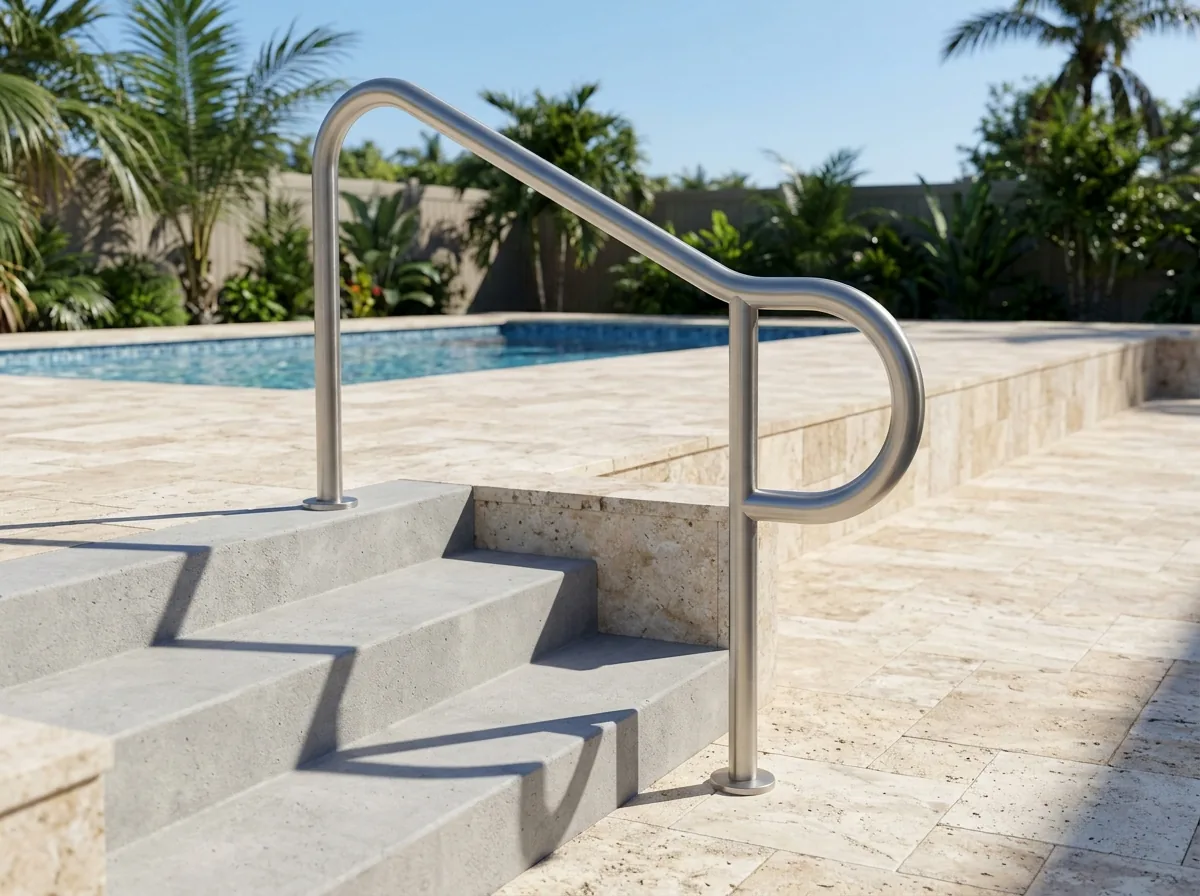
Stainless steel pipe handrails
A round stainless rail on two or three posts is the simple fix for a few steps down to a patio or pool deck. Near salt water, the grade decides how it ages, and the usual advice is 316 hardware rather than 304.
- Stainless steel stair railing: $50 to $250 per linear foot installed (HomeGuide stair guide).
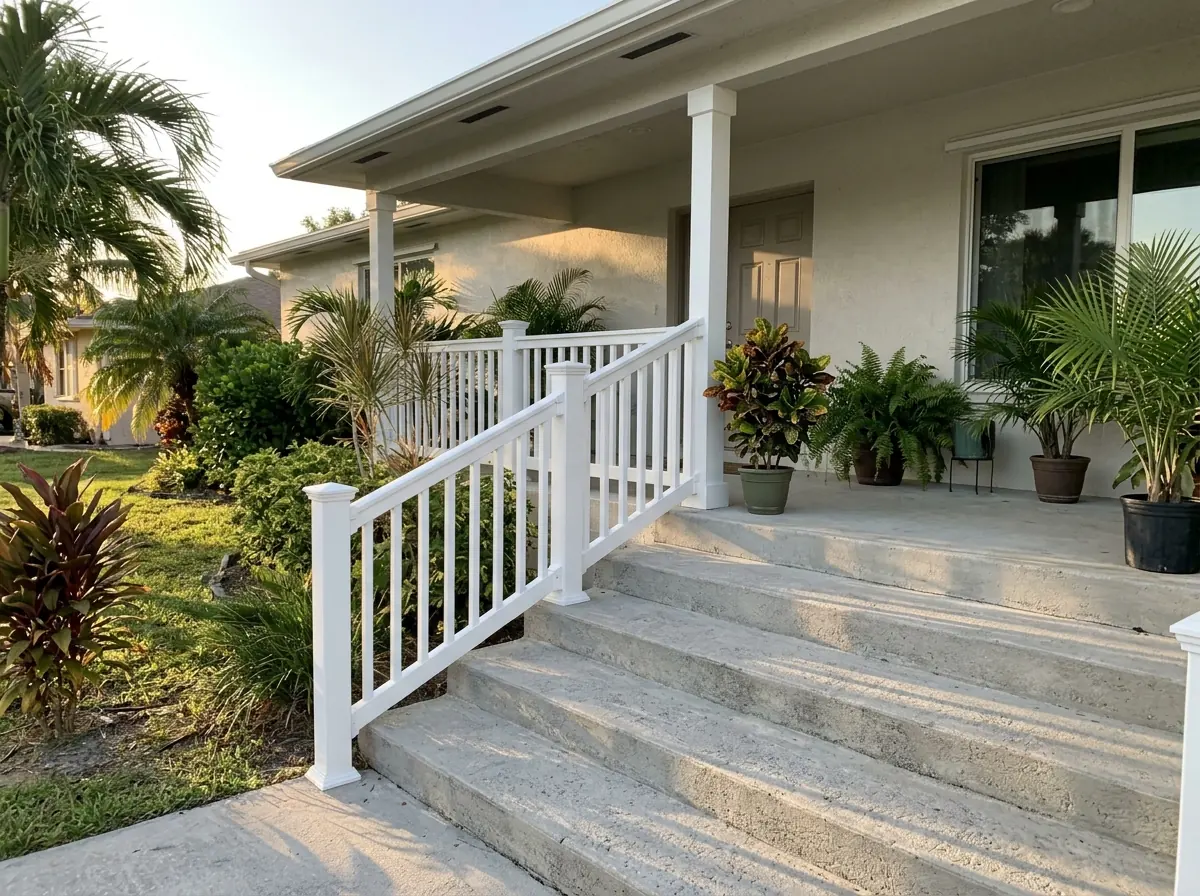
Composite, vinyl and fiberglass railings
Plastics trade looks for low upkeep. Vinyl is the cheapest and shrugs off rain, though strong sun can fade it. Composite won't rot or need repainting. Fiberglass is mostly a commercial product but doesn't rust, and HomeGuide suggests it for coastal sites. Florida's residential code has a separate rule for exterior plastic composite handrails (R311.7.8.4), so ask for a product rated for that use.
- Vinyl: $25 to $45 per linear foot.
- Composite: $40 to $75 per linear foot.
- Fiberglass: around $150 per linear foot.
Why Pompano Beach homeowners call Pompano Stair Railing
- One local railing installer per request, not a call list
- Free to homeowners: no referral fee
- Ask for material, finish and hardware grade in writing
- Permit and inspection named on the quote
How Railing Posts Are Anchored in Concrete Steps
The post base is the part to ask about. Engineers writing in The Construction Specifier describe grouted post pockets that crack the concrete around them and sometimes push the post out, and they note that chlorides from marine environments make it worse. What to ask about before the drill comes out:
Core-drilled pockets
The post sits in a hole cored into the step and filled with grout. The engineers call it the generally favored method: the posts can go where they're needed, and it costs less than casting in sleeves.Base plates
The post bolts to the surface through a plate and anchors. It's also one of the repairs when an old pocket has failed.The grout
Expansive or gypsum-based grout that stays wet can swell and spall the step. The engineers advise against gypsum-based grout outdoors.Water at the base
Fill the hole fully, crown the grout so it sheds rain, and seal around the post. Hollow posts need a weep at the bottom.
Outdoor Stair Railing Cost and Timeline in Pompano Beach
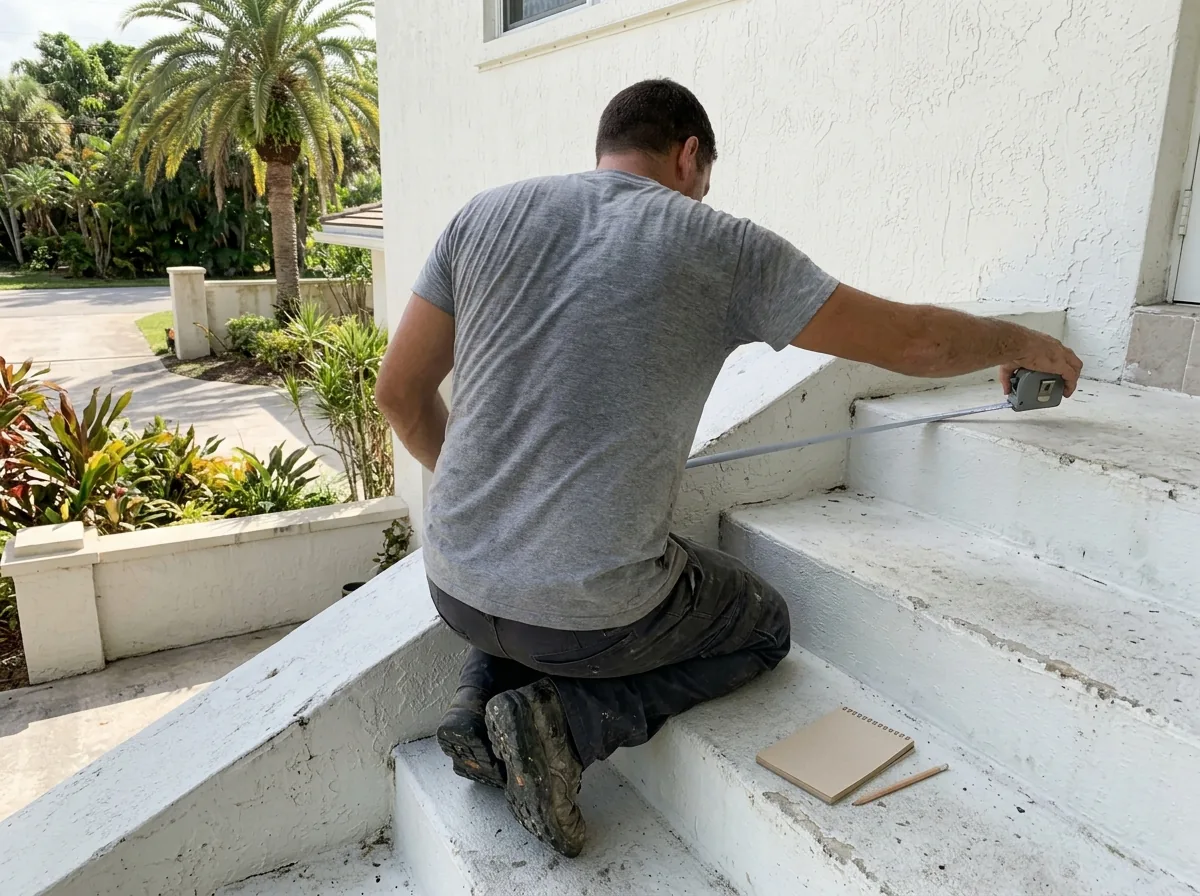
Concrete costs more to anchor into than wood framing, HomeGuide notes, because of the drill bits, anchors and extra labor. Expect the price to move with the number of posts, any curve or ornamental work, and the finish. Every exterior railing in Broward is designed for hurricane-zone wind loads (approval rules), and the job usually needs a city permit.
Labor
about $30 per linear foot (HomeGuide, 2026).Curves and ornamental work
20% to 50% or more on top of a plain railing.Weatherproofing coatings
$50 to $200 or more.Time on site
a short straight run is a few hours' work; core-drilling concrete and joining several sections can stretch it past a day.